In Santa Cruz, staying well is part of the week. Hiking Nisene Marks, training in Aptos, keeping up with your kids in Capitola. So it makes sense that we get asked about peptides almost daily.
Here is the plain version: what they are, which ones we prescribe, and what the science does and does not show yet.

What is peptide therapy?
Peptides are short chains of amino acids that your body uses as signals. Each one binds a specific receptor and asks cells to do a specific job. Some prompt the pituitary to release growth hormone. Others are being studied for tissue repair, or for how cells make energy.
Peptide therapy means a licensed provider prescribes one of these for you, and a licensed pharmacy compounds it. It is prescription care, not a supplement.
A plan, not a menu. One peptide, prescribed for one patient, with a provider following along.
The peptides we prescribe
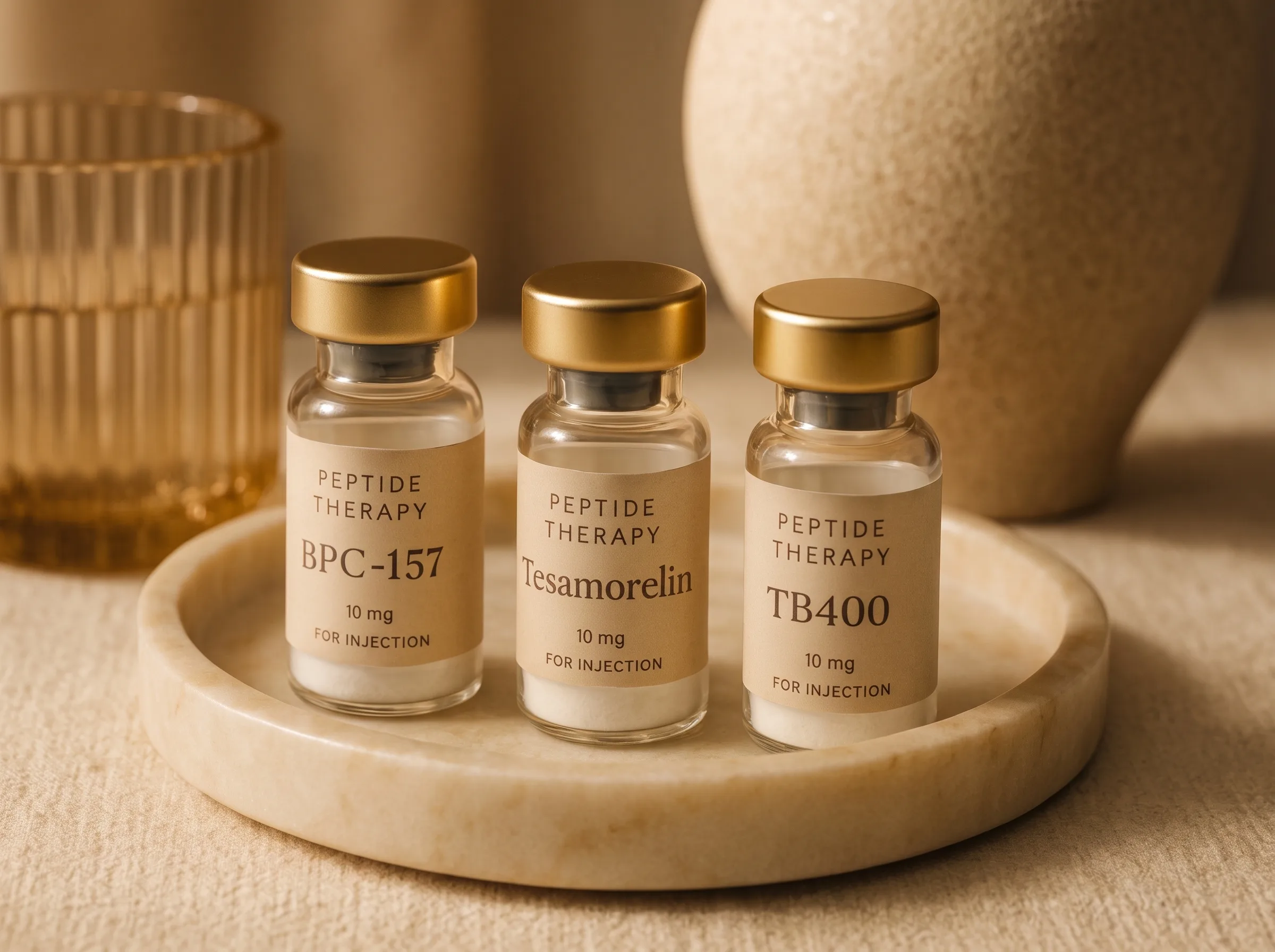
- Sermorelin. A copy of the signal your brain uses to ask for growth hormone. It prompts your body to release its own, mostly during sleep. Labs come first.
- BPC-157. Studied in animals for tendon, ligament and muscle repair. Human research is still early.
- NAD+. A coenzyme (not a peptide) that every cell uses to make energy. Levels fall with age.
- MOTS-c. A mitochondrial peptide studied for how muscle uses fuel.
- Semax. A nasal spray studied for focus.
Each one is a single ingredient. We do not sell blends.
Do peptides really work? What the research says
Honestly, it depends on the peptide, and for most of them the human evidence is still early.
- Sermorelin was once FDA-approved as a brand-name injection for children with growth hormone deficiency. The brand was discontinued, and today it is available only as a compounded prescription.
- BPC-157 and MOTS-c have mostly animal and lab studies behind them.
- NAD+ has animal studies and small human studies.
Compounded peptides are not FDA-approved. In October 2026, HHS issued an interim enforcement policy covering six peptides, including BPC-157, MOTS-c and Semax, when a licensed pharmacy compounds each one as a single ingredient for an individual prescription. That is not an approval. It is why we prescribe them one at a time, from licensed US pharmacies, and never touch research-grade product.
How it works at Nurvana
- A provider visit. A licensed provider reviews your history and your goal. Some peptides need recent bloodwork first.
- One prescription. If it fits, your provider prescribes one peptide. If it does not, we tell you plainly.
- A licensed pharmacy. A 503A pharmacy compounds it for you, with your name on the label.
- Follow-up. Our team checks in, adjusts the dose and answers questions along the way.
Why this fits Santa Cruz
If you live here, you probably already do the basics: movement, real food, ocean air. Peptides do not replace any of that. For the right person, with a provider watching, they can be one more tool. And if one is not right for you, we will say so.

Curious about peptides?
See the peptides we prescribe or book a consultation with our team in Aptos, minutes from Capitola, Soquel, and Santa Cruz.
Reach us at (831) 251-6264 or office@nurvanamd.com.
This article is general information, not medical advice. Peptides require an evaluation and a prescription from a licensed provider. Compounded medications are not FDA-approved, and individual results vary.
Ready when you are
Book a consultation with our team in Aptos and we'll build a plan around your goals.